

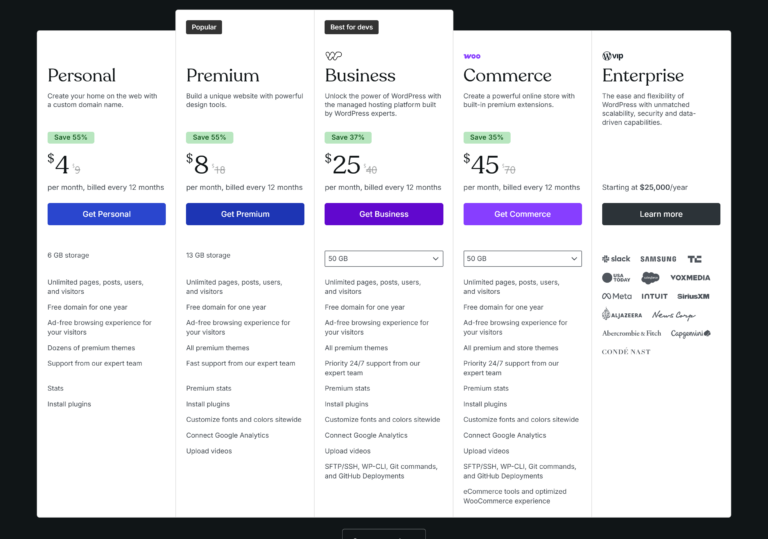
Building a website in 2026 is easier than ever, but choosing the right WordPress plan is still one of the most confusing decisions for beginners and even experienced site owners. WordPress now offers five main plans: Personal, Premium, Business, Commerce, and Enterprise. Each one is designed for a different type of user, website size, and growth goal.
If you choose a plan that’s too small, you’ll quickly hit limitations. If you choose one that’s too big, you may end up paying more than you need. This guide breaks down what each WordPress plan includes, who it’s best for, and how to think about scalability, plugins, themes, and storage, so you can make a smart decision without wasting money.
1. Why Choosing the Right WordPress Plan Matters in 2026
In 2026, websites are no longer just digital brochures. They often include:
High-resolution images and videos
Blogs and SEO content
Lead forms and integrations
E-commerce features
Analytics, tracking, and automation
WordPress plans differ significantly in customization freedom, plugin access, storage capacity, performance, and scalability. Picking the right plan upfront saves time, migration headaches, and redevelopment costs later.
2. Overview: The Five WordPress Plans
Here’s a quick snapshot before we go deeper:
Personal – Simple personal sites
Premium – Bloggers and creatives
Business – Small companies and service businesses
Commerce – Online stores and sellers
Enterprise – Large organizations and high-traffic platforms
Now let’s break them down one by one.
3. Personal Plan: Best for Individuals and Simple Websites
The Personal plan is the most basic paid WordPress option. It’s designed for people who want a clean, professional-looking website without advanced features.
3.1 Who It’s For
Personal websites
Online resumes
Simple portfolio pages
Hobby projects
3.2 Key Characteristics
Limited customization
Access to basic themes
No custom plugin installation
Modest storage space
3.3 Pros
Lowest cost
Easy to set up
No technical knowledge required
3.4 Limitations
Not suitable for business growth
No advanced SEO tools
No custom plugins
If your website is mainly informational and unlikely to grow much, this plan works. But if you plan to add marketing tools or monetization later, you’ll outgrow it quickly.
4. Premium Plan: Ideal for Bloggers and Content Creators
The Premium plan is a popular choice for bloggers and creators who want more design flexibility and media support.
4.1 Who It’s For
Bloggers
Freelancers
Content creators
Personal brands
4.2 Key Characteristics
Access to premium themes
More customization options
Increased storage for images and videos
Monetization options
4.3 Pros
Better design flexibility
More space for media assets
Strong blogging tools
4.4 Limitations
Still no custom plugin installation
Limited integration with third-party tools
This plan is great if your site focuses on content, storytelling, and visuals. If your blog relies heavily on images or embedded videos, the extra storage makes a real difference.
5. Business Plan: Best for Small Companies and Service Businesses
The Business plan is where WordPress becomes truly powerful. It unlocks plugin installation, which is critical for most professional websites.
5.1 Who It’s For
Small businesses
Consultants
Agencies
Local service providers
5.2 Key Characteristics
Install custom plugins
Access to free and premium plugins
Advanced SEO tools
More storage space
Enhanced site performance
5.3 Pros
Full control over site functionality
Compatible with marketing, analytics, and CRM tools
Strong scalability
5.4 Why Plugins Matter
Plugins allow you to:
Add contact forms
Track conversions
Improve SEO
Speed up your site
Connect third-party services
Many essential plugins are free, while premium plugins add advanced features. Without plugin access, your site’s growth is limited.
For most businesses, this is the minimum recommended plan in 2026.
6. Commerce Plan: Built for E-commerce Sellers
If you plan to sell online, the Commerce plan is specifically designed for that purpose.
6.1 Who It’s For
Online sellers
DTC brands
Subscription services
Digital product businesses
6.2 Key Characteristics
Full e-commerce functionality
Secure payment processing
Inventory and order management
Advanced analytics
High storage for product images and videos
6.3 Pros
Optimized for online sales
Built-in store management tools
Scales with growing traffic and sales
6.4 Storage Matters More Here
E-commerce websites consume much more space due to:
Product images
Demo videos
Customer data
Order records
Choosing a plan with sufficient storage ensures performance stays fast even as your store grows.
7. Enterprise Plan: For Large Companies and High-Traffic Platforms
The Enterprise plan is designed for large organizations with complex needs and high traffic.
7.1 Who It’s For
Large companies
Media platforms
High-traffic corporate websites
Global brands
7.2 Key Characteristics
Custom infrastructure
Advanced security
Performance optimization
Dedicated support
Large-scale storage and bandwidth
7.3 Pros
Extremely scalable
Enterprise-grade reliability
Custom integrations
This plan is not about cost savings. It’s about stability, performance, and risk reduction for mission-critical websites.
8. Themes: Free vs Premium and Why It Matters
WordPress offers thousands of free and premium themes, but plan level affects how much control you have.
8.1 Free Themes
Good for simple layouts
Limited customization
Often enough for small sites
8.2 Premium Themes
Advanced design options
Better performance
Regular updates and support
Higher plans allow you to fully leverage premium themes, which often reduce development time and improve user experience.
9. Plugins: Free and Premium Options Explained
Plugins are the backbone of WordPress flexibility.
9.1 Free Plugins
SEO basics
Security
Caching
Contact forms
9.2 Premium Plugins
Advanced SEO
E-commerce optimization
Marketing automation
Membership systems
The Business plan and above let you combine free and premium plugins to create a highly customized website without rebuilding from scratch later.
10. Storage Space: Images, Videos, and Growth
In 2026, websites are visually heavy. Storage matters more than many people expect.
10.1 What Uses Storage
Images and galleries
Videos
Blog content
Backups
If your site includes video backgrounds, product demos, or large image libraries, choosing a higher plan prevents performance issues and upgrade stress later.
11. How Bel Oak Marketing Helps You Choose the Right Plan
Bel Oak Marketing has extensive experience developing WordPress websites across all plan levels, from simple personal sites to complex business and e-commerce platforms.
We help clients:
Match website goals to the right WordPress plan
Avoid overpaying for unused features
Build scalable sites that grow smoothly
Choose themes and plugins that fit long-term strategy
Instead of guessing, you get a clear roadmap based on your business model, content needs, and growth expectations.
12. Choose Smart, Build Once, Grow Confidently
Choosing a WordPress plan in 2026 isn’t about picking the cheapest option. It’s about balancing cost, flexibility, and future growth.
Personal and Premium plans work for individuals and creators
Business plans fit most professional websites
Commerce plans power serious online selling
Enterprise plans support large-scale operations
If you’re unsure which plan fits your goals, get a free consultation with Bel Oak Marketing. We’ll help you choose wisely, build efficiently, and grow confidently—without costly rebuilds later.
For more information, visit Bel Oak Marketing.