

The rise of AI generated arts has become one of the most disruptive forces in the visual content economy. Over the past few years, AI generated images and AI generated videos have moved from experimental novelties to commercially viable assets used in advertising, social media, web design, filmmaking, and e-commerce. In 2026, the conversation is no longer about whether AI will impact the stock photo industry. The real question is how deeply and permanently it will reshape it.
This shift affects stock photos, stock images, stock pictures, and stock videos at every level — from individual contributors to global agencies, from small businesses to Fortune 500 brands.
1. The Latest Progression of AI Generated Arts in 2026
AI generated arts have evolved dramatically compared to their early iterations. In 2023 and 2024, AI images often struggled with hands, perspective, typography, and consistency. By 2026, multimodal AI systems have become significantly more advanced in realism, coherence, and motion control.
There are three major progressions shaping the landscape:
First, realism and controllability. AI generated images now offer precise control over lighting direction, camera lens simulation, depth of field, geographic style, and even brand-safe composition guidelines. Designers can specify camera type, time of day, cultural environment, and emotional tone with surprising accuracy. Photorealism is no longer the main barrier; consistency and art direction have improved enough for serious commercial use.
Second, AI generated videos have matured rapidly. Text-to-video and image-to-video systems now produce stable character motion, better physics simulation, and temporal coherence across scenes. AI generated arts are no longer limited to static visuals. Short-form social content, animated product showcases, explainer videos, and stylized brand loops can be generated at scale. While long-form cinematic production still requires human oversight, AI generated video is now viable for stock videos alternatives in many marketing scenarios.
Third, integration into creative ecosystems. AI tools are deeply embedded into design platforms, editing software, and marketing workflows. Instead of being a separate novelty tool, AI generation is now part of the production pipeline. This makes AI generated images easier to adopt for teams already working with creative software.
2. How AI Evolution Is Reshaping the Stock Photo Industry
The stock photo industry traditionally operates on a large catalog model. Contributors upload stock images or stock pictures to centralized platforms. Buyers search by keywords, license content, and download assets.
AI fundamentally challenges this model in three ways.
On-demand generation replaces search friction. Instead of browsing through thousands of stock photos to find a “diverse startup team in a modern office at sunset,” a marketer can generate exactly that image. This eliminates search time and reduces reliance on pre-existing catalogs.
Infinite variation reduces repetition. Stock images often feel repetitive because popular themes are reused across brands. AI generated arts allow each business to create unique variations of similar concepts. This helps brands differentiate visually without commissioning a full custom photoshoot.
Cost structure shifts. Traditional stock photos and stock videos rely on subscription or per-asset licensing models. AI generated images operate on a subscription model with unlimited generation potential. This shifts the economic value from individual images to platform access.
However, this does not mean stock images disappear. Instead, the industry is evolving into a hybrid model. Many stock platforms now incorporate AI tools into their services. They offer licensed datasets, controlled AI generation environments, and brand-safe AI outputs. The goal is to combine the legal clarity of stock photos with the flexibility of AI generated arts.
3. Stock Photos vs AI Generated Images in Use Scenarios
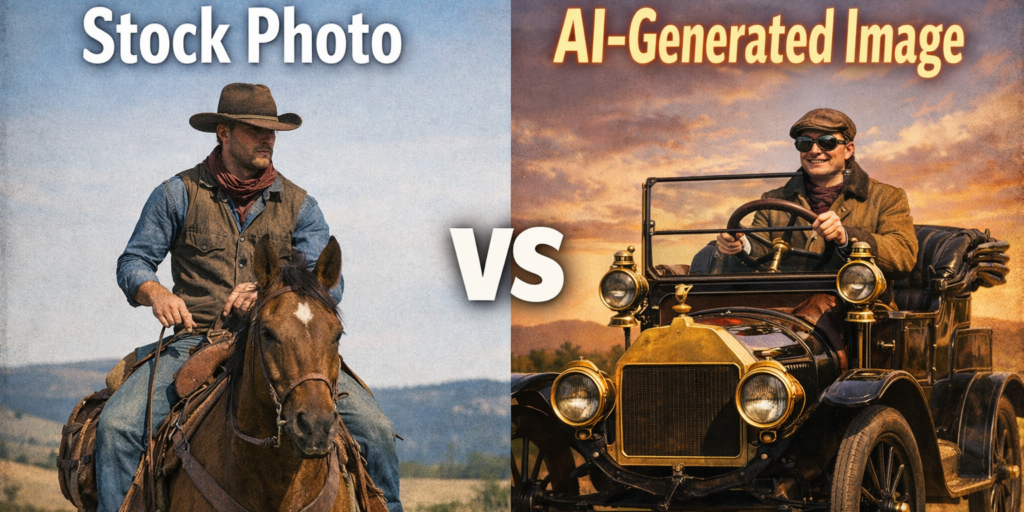
To understand the future, it helps to compare stock photos and AI generated images across practical use cases.
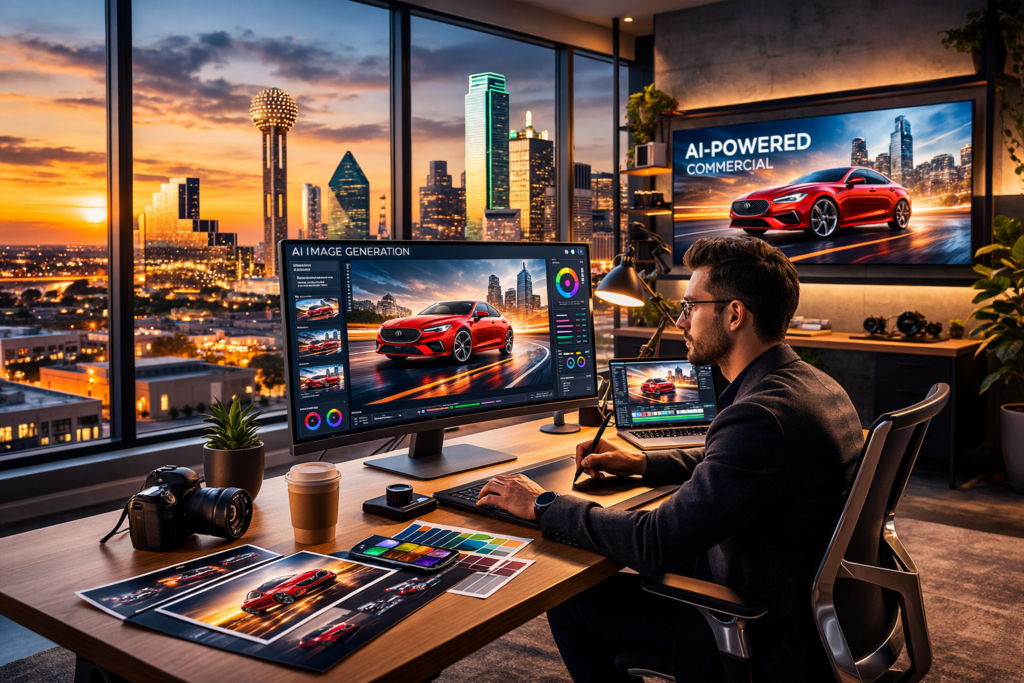
For generic marketing visuals, AI generated images often outperform stock pictures in flexibility. A small business needing blog headers, social media ads, or landing page illustrations can quickly generate tailored visuals aligned with brand colors and messaging. In these cases, AI offers speed and customization advantages.
For conceptual art and imaginative scenes, AI generated arts clearly lead. Creating futuristic environments, surreal compositions, or highly stylized visuals through stock photos would require complex compositing or expensive custom shoots. AI makes these accessible within minutes.
For localized branding, AI generated images provide hyper-specific customization. A real estate company in a specific city can generate visuals reflecting regional architecture and lifestyle without relying on limited stock images for that region.
However, stock photos retain important strengths.
Authenticity and trust remain critical for certain industries. In corporate websites, healthcare campaigns, financial services advertising, and legal services marketing, real human photography often performs better in building trust. Real faces, real offices, and documented environments can communicate credibility in ways that AI generated images sometimes struggle to match.
Editorial and news content is another protected domain. Stock videos and stock images used for journalism, documentaries, or factual reporting require verifiable authenticity. AI generated arts cannot replace actual event coverage or documentary photography.
Legal clarity is also a decisive factor. Stock photos and stock videos come with model releases and licensing frameworks. AI generated images, while increasingly regulated and clarified, still raise questions about training data, likeness rights, and brand resemblance. Large corporations tend to prefer the legal predictability of licensed stock images.
4. Economic Impact on Contributors and Agencies
For individual contributors who relied on uploading generic stock pictures in large volumes, AI presents significant pressure. High-volume, low-differentiation stock photos are the most vulnerable segment. When AI can generate endless variations of “business handshake” or “customer service representative smiling,” the economic value of those images declines.
Agencies, however, are adapting. Many stock platforms now invest in proprietary AI models trained on licensed datasets. This allows them to offer AI generated images within a legally controlled environment. Some platforms provide AI-assisted editing, background replacement, and variation generation for existing stock photos.
This evolution transforms stock companies from pure image libraries into creative infrastructure providers. The revenue model shifts from selling static assets to offering integrated visual creation ecosystems.
5. The Rise of Hybrid Workflows
In 2026, the most effective strategy for many marketers and designers is hybrid.
A campaign may use stock videos for authentic lifestyle footage, AI generated images for conceptual product backgrounds, and real photography for executive portraits. Designers may start with a stock photo and enhance or extend it using AI tools. This blend maximizes efficiency while preserving credibility.
Rather than replacing stock photos entirely, AI generated arts expand the range of visual possibilities.
6. Long-Term Industry Outlook
Looking ahead, the stock photo industry will likely undergo structural consolidation. Platforms that fail to integrate AI generation tools may struggle. Those that combine licensed stock images, stock videos, and AI generated arts into seamless workflows will remain competitive.
Pricing models may shift toward platform subscriptions with bundled AI capabilities. Contributors may evolve into “prompt designers,” curators, or AI art directors who specialize in guiding AI systems to produce commercially effective visuals.
The definition of authorship may also change. Instead of traditional photographers uploading raw stock pictures, creative professionals may curate datasets, design generative templates, or develop AI-enhanced visual systems.
At the same time, authenticity will become a premium asset. As AI generated images flood the market, genuine photography may gain increased value in contexts where trust, realism, and human connection matter most.
7. AI Generated Arts Are Redefining Photo Industry
AI generated arts are not simply disrupting the stock photo industry; they are redefining it. In 2026, AI generated images and AI generated videos have reached a level of realism, control, and accessibility that makes them indispensable for many commercial applications.
Stock photos, stock images, stock pictures, and stock videos will not disappear, but their role is changing. Generic content faces the greatest pressure, while authentic, editorial, and legally verified assets remain resilient.
The future belongs to hybrid models that combine the scalability of AI generated arts with the credibility and legal clarity of traditional stock imagery. The industry is moving from static catalogs to dynamic visual ecosystems, where generation, customization, and licensing coexist.
In this new landscape, adaptability is the key advantage. Businesses that understand when to use stock photos and when to rely on AI generated images will achieve the greatest creative efficiency and competitive edge.
For more information, visit Bel Oak Marketing.